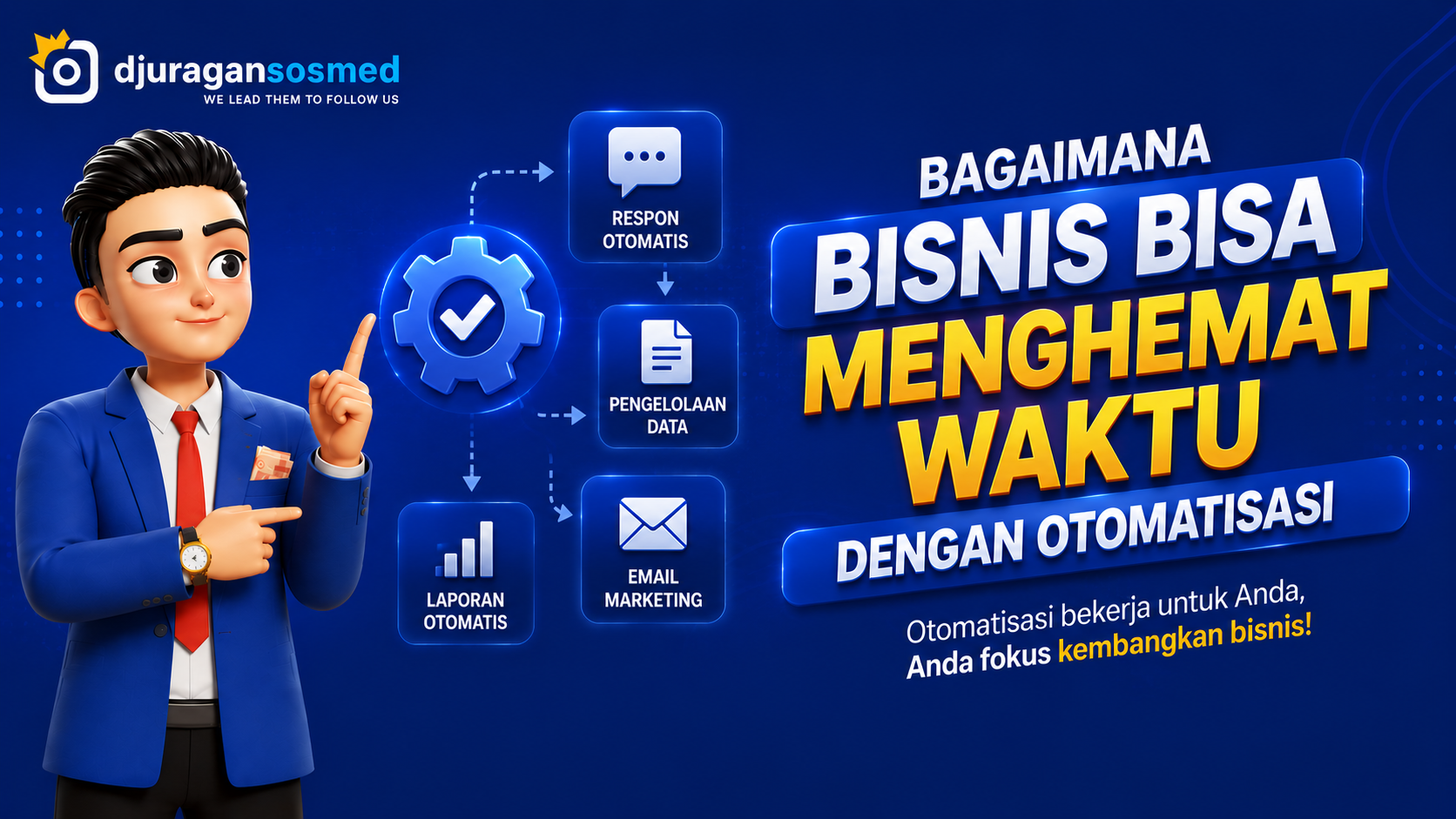
How Businesses Can Save Time with Automation
Running a business is not only about developing strategies to attract customers. Managing time efficiently is equally important. As the number of tasks increases, repetitive manual work can take up a significant amount of time.
Automation is one way businesses can simplify these processes. With the right technology, certain routine tasks can run automatically, allowing teams to focus more on activities that require decision-making and strategic thinking.
What Is Business Automation
Business automation is the use of technology to perform certain tasks without requiring them to be handled manually every time.
Examples include sending messages, recording transactions, managing customer data, creating reports, and scheduling social media content.
The goal is not simply to reduce human involvement, but to make business processes more practical, consistent, and organized.
Why Automation Can Save Time
Reducing Repetitive Tasks
Tasks that need to be performed repeatedly can consume a considerable amount of time. For example, entering the same data, sending customer information, or preparing regular reports.
With automation, these tasks can be performed by a system based on predefined rules. Teams no longer need to repeat the same process every day.
Speeding Up Business Processes
Automation allows certain tasks to be completed faster because systems can perform them without waiting for someone to handle each step manually.
For example, when a customer completes a transaction, the system can immediately record the data and update the necessary information. A process that previously required several manual steps can become much shorter.
Reducing the Risk of Errors
Repetitive manual work can also increase the risk of mistakes. Small errors in data entry or information delivery can affect the next stage of a process.
An automated system can help maintain consistency as long as the rules and data used have been set up correctly.
Helping Teams Focus on Important Work
Time previously spent on administrative tasks can be redirected toward activities that provide greater value.
Teams can focus more on customer service, strategy development, product improvement, business analysis, or building stronger relationships with their audience.
Examples of Automation for Businesses
Automation does not have to be applied to every business activity at once. Businesses can start with simple tasks that are performed frequently.
Some examples include:
- Scheduling social media content
- Sending automated emails
- Recording transactions and customer data
- Generating regular reports
- Sending payment or order notifications
- Managing frequently asked customer questions
- Integrating data across different platforms
For businesses that actively use multiple digital platforms, automation can also reduce the need to constantly switch between different systems.
Automation Does Not Mean Eliminating Human Roles
One common misconception about automation is that technology will replace all human work.
In practice, automation is more suitable for handling routine and structured tasks. Activities that require creativity, strategy, empathy, and an understanding of customers still require human involvement.
Therefore, automation should be used as a supporting tool that makes work more efficient.
How to Start Automating Your Business
Businesses do not need to change their entire system at once. A good starting point is to identify tasks that consume the most time.
Ask yourself these questions:
- What tasks are repeated every day?
- Which processes are still handled manually?
- Which activities often cause delays?
- Does the task follow a clear and predictable pattern?
Once you identify a suitable process, choose a tool that can help automate it. Then evaluate the results to make sure the system actually saves time instead of creating additional complexity.
Automation in Social Media Management
For businesses that rely on social media, managing different activities can take a significant amount of time. This includes preparing content, monitoring performance, and managing social media service needs.
Using the right digital systems and services can help businesses manage these activities in a more organized way. Djuragansosmed can also become part of a social media management strategy, especially for businesses that need services across multiple social media platforms.
Most importantly, automation should always support the business objective. Technology should make work simpler rather than simply increasing the number of tools being used.
Conclusion
Saving time does not mean working less. It means reducing the time spent on tasks that can be simplified.
Automation helps businesses handle routine activities faster, more consistently, and in a more organized way. As a result, teams can dedicate more time to strategic activities that contribute to business growth.
Businesses can start with one simple process to see the benefits of automation. Once it proves effective, automation can gradually be expanded to other areas of the business.
FAQ
Is automation only suitable for large businesses?
No. Small businesses can also use automation to reduce repetitive tasks and save operational time.
What tasks are best suited for automation?
Tasks with repetitive patterns and clear rules are generally the easiest to automate, such as data recording, notifications, scheduling, and regular reports.
Can automation replace employees?
Not necessarily. Automation is mainly used to support routine tasks so employees can focus on activities that require creativity, judgment, and decision-making.
Do all business processes need to be automated?
No. Businesses should prioritize processes that consume significant time or are performed repeatedly. The right automation should make the workflow simpler.
How can a business measure whether automation is effective?
Compare the time and resources required before and after automation. If the process becomes faster, more organized, and maintains good quality, the automation is providing value.