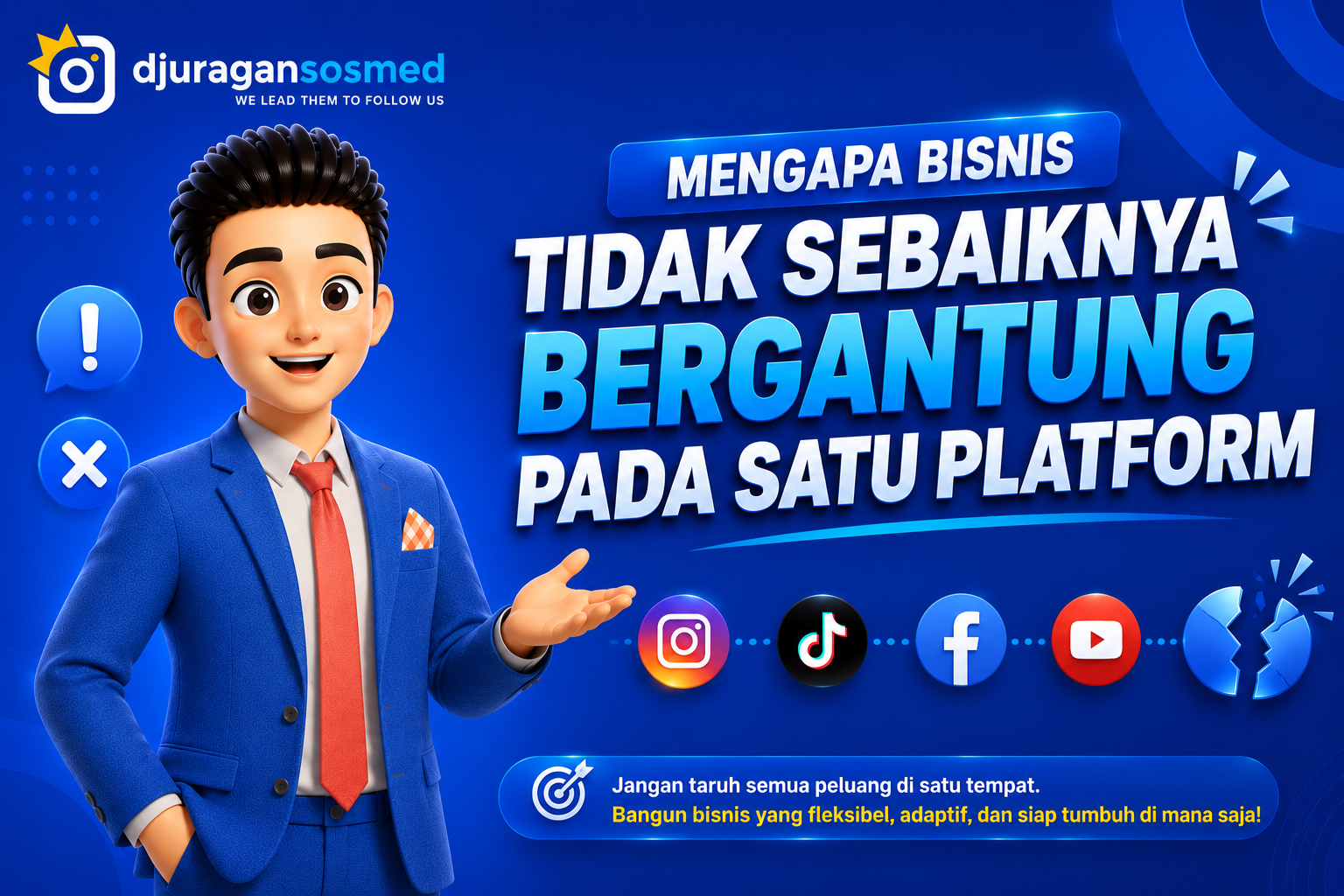
Why Businesses Should Not Depend on a Single Platform
Many businesses build their audience and sales through a single platform because it feels easier to manage. As long as content continues to reach people and customers keep coming in, this strategy may seem safe.
The problem appears when the platform changes. Algorithms can change, reach can decline, certain features can be removed, accounts can face restrictions, or users can move to other platforms.
That is why businesses need to build a digital presence that does not depend entirely on one source.
The Risks of Relying on a Single Platform
Depending on one platform can make a business more vulnerable to changes that are outside its control.
Algorithm Changes Can Affect Reach
Every platform has its own content distribution system, and these systems continue to evolve. Content that once received strong visibility may not perform the same way after an algorithm update.
If an entire marketing strategy relies on one platform, even a small change can have a significant impact on traffic and sales.
Account Issues Can Disrupt Business Activities
Social media accounts are valuable business assets, but they still operate within an ecosystem controlled by the platform. Restrictions, loss of access, or technical problems can temporarily interrupt promotional activities.
Businesses with additional channels still have alternatives for communicating with their customers.
Audience Behavior Can Change
Internet users do not always stay on the same platform. Trends can shift, and new platforms may become more attractive to certain audiences.
Businesses that focus exclusively on one platform may find it harder to adapt to these changes.
Why Businesses Need Multiple Channels
Platform diversification does not mean a business needs to be active on every social media platform. What matters more is having several channels that are relevant to the target audience.
Expanding Traffic Sources
Websites, Instagram, TikTok, YouTube, Facebook, X, email, and other channels can provide different sources of traffic.
If one source experiences a decline, the business still has other channels that can bring in audiences.
Building Stronger Customer Relationships
Each platform has its own characteristics. Some are better suited for short-form videos, educational content, quick communication, or community building.
By using multiple channels, businesses can adapt their communication style without simply posting exactly the same content everywhere.
Reducing Business Risk
Diversification provides a level of protection when changes occur on one platform.
The goal is not to collect as many followers as possible, but to make sure a business does not lose all access to its audience simply because one channel experiences a problem.
Why a Website Still Matters for Digital Businesses
Social media can help attract attention, but businesses should also have digital assets that they control themselves.
A website can serve as a central place for product information, services, contact details, and other important business information. Social media can then be used as a channel to direct audiences toward that asset.
With this approach, changes on one platform are less likely to completely disrupt the connection between a business and its potential customers.
How to Build a Strategy That Does Not Depend on One Platform
There is no need to immediately create accounts on every platform. Businesses can build their strategy gradually.
Choose a Main Platform
Start with one or two platforms that best match the target audience and content type. Maintaining focus is still important so that managing multiple channels does not become overwhelming.
Prepare Supporting Channels
Once the main platform is running consistently, build additional channels such as a website or other social media platforms that have the potential to reach the same audience.
Repurpose Content in Different Ways
One content idea can be developed into several formats. A short video, for example, can be adapted for TikTok, Instagram Reels, or YouTube Shorts, while the same topic can be expanded into a website article.
This approach allows businesses to distribute content more widely without creating everything from scratch.
Build Assets You Own
Customer databases, websites, catalogs, and direct communication systems are assets that are not completely dependent on social media algorithms.
The more assets a business owns, the greater its control over customer relationships.
The Role of Djuragansosmed in a Multi-Platform Strategy
When a business starts using multiple platforms, the challenge is not only choosing the right channels but also maintaining consistent activity across them.
Djuragansosmed can support social media needs through various services for platforms such as Instagram, TikTok, YouTube, Facebook, and X. This can give businesses more flexibility as they develop their digital presence across multiple channels.
However, a multi-platform strategy should still be based on the target audience, content type, and business objectives. Supporting services should be part of the overall strategy, not a replacement for quality content and meaningful customer communication.
Conclusion
Relying on a single platform may seem convenient, but it can increase business risks when algorithms change, account problems occur, or audience behavior shifts.
Businesses that are better prepared generally avoid placing all their traffic and customer communication in one place. Building several connected channels, including a website as an owned digital asset, can make a digital strategy more stable over the long term.
The goal is not to be present on every platform. It is to make sure the business always has a way to reach its customers when one channel changes.
FAQ
Does a business need to use every social media platform?
No. Choose platforms that match your target audience and your ability to manage them consistently.
What is the biggest risk of relying on one platform?
The business becomes more vulnerable to algorithm changes, account restrictions, technical issues, and shifts in user behavior.
Is a website still important if a business is already active on social media?
Yes. A website can serve as a digital asset that gives a business greater control over its information and customer relationships.
How can a business start a multi-platform strategy?
Start with one main platform, then gradually add relevant supporting channels. Repurpose content into formats that fit each platform.
Does using multiple platforms mean creating more content?
Not necessarily. One idea can be developed into several formats, allowing it to be distributed across multiple channels without creating everything from scratch.