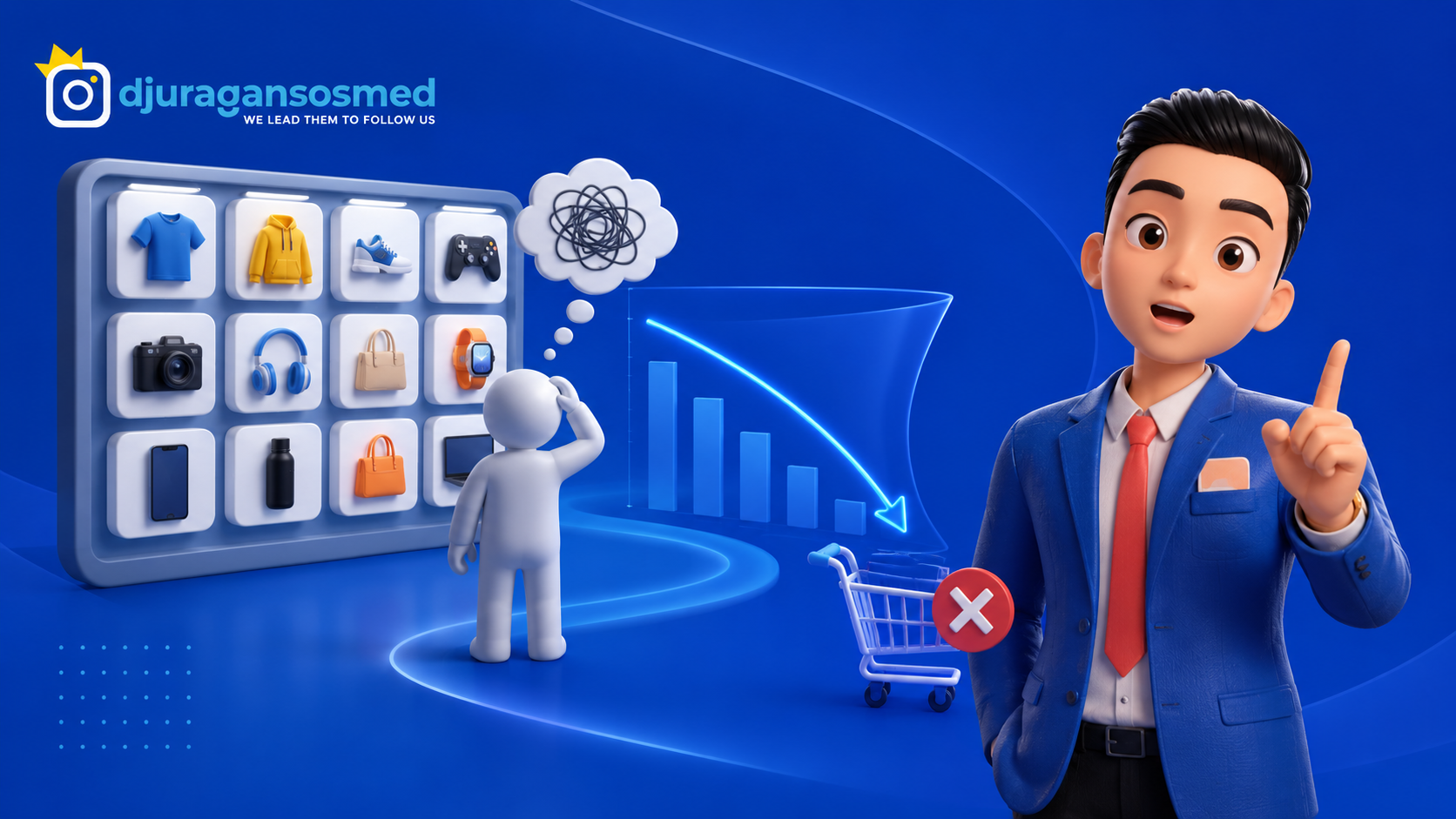
Choice Overload: Why Too Many Choices Can Reduce Sales
Many business owners believe that offering more products or services will naturally increase sales. However, research in consumer behavior suggests the opposite. When customers are presented with too many options, they often become overwhelmed, delay their decision, or leave without making a purchase.
This phenomenon is known as Choice Overload, a concept widely discussed in consumer psychology and modern marketing. Understanding this principle can help businesses create a better customer experience while improving conversion rates.
What Is Choice Overload?
Choice Overload refers to a situation where having too many options makes decision-making more difficult.
The concept became widely recognized through psychologist Barry Schwartz in his book The Paradox of Choice and was supported by consumer behavior research conducted by Sheena Iyengar and Mark Lepper. Their studies demonstrated that while a large selection attracts attention, it does not necessarily lead to more purchases.
In many cases, simplifying choices can produce better business results.
Why Too Many Choices Reduce Sales
1. Customers Become Afraid of Making the Wrong Decision
When people see dozens of similar products or service packages, they tend to compare every detail. The longer they compare, the more likely they are to postpone their purchase.
Instead of buying immediately, they decide to "think about it"—and often never return.
2. Decision-Making Becomes Mentally Exhausting
The human brain has a limited capacity for processing information. As the number of options increases, so does the mental effort required to evaluate them.
Eventually, customers may decide that making no decision is easier than choosing among countless alternatives.
3. Customer Satisfaction Can Decrease
Choice Overload doesn't only affect purchasing decisions—it can also influence satisfaction after the purchase.
Customers may continue wondering whether another option would have been better, leading to uncertainty and reduced confidence in their decision.
Examples of Choice Overload in Digital Marketing
This phenomenon is common in digital marketing, including:
- Websites displaying too many service packages at once.
- Online stores with hundreds of similar products and no recommendations.
- Landing pages filled with multiple call-to-action buttons.
- Promotional pages offering numerous discounts simultaneously.
Instead of encouraging action, these situations often confuse visitors and reduce conversion rates.
How to Prevent Choice Overload
Businesses can reduce decision fatigue by applying a few simple strategies:
- Present only the most relevant options.
- Organize products into clear categories.
- Highlight a "Most Popular" or "Recommended" choice.
- Keep website layouts clean and easy to navigate.
- Focus each page on a single primary goal.
Helping customers make decisions faster often leads to higher conversions.
What Can Businesses Learn?
Modern marketing is not about offering the greatest number of choices—it's about making decisions easier for customers.
Companies that simplify the buying process often create a smoother customer experience, build greater trust, and achieve stronger sales performance.
Conclusion
Choice Overload reminds us that simplicity can be more powerful than abundance. When customers can quickly identify the best option for their needs, they are far more likely to complete a purchase.
Rather than continuously expanding your product list, focus on creating a buying experience that is clear, organized, and easy to understand.
Grow Your Digital Presence with Djuragansosmed
A successful digital marketing strategy isn't about offering endless choices—it's about providing the right solutions at the right time. Djuragansosmed offers a wide range of social media and digital marketing services designed to help businesses grow efficiently, making it easier for you to choose the services that match your goals.
FAQ
Does offering more products always increase sales?
No. If customers face too many similar options without clear guidance, they may become overwhelmed and postpone their purchase.
What causes Choice Overload?
It occurs when customers receive more information and options than they can comfortably process, making decisions more difficult.
How can businesses reduce Choice Overload?
Simplify product offerings, organize them into categories, highlight recommended options, and create a straightforward buying journey.
Is Choice Overload only relevant to e-commerce?
No. It applies to almost every industry, including digital services, retail, hospitality, software, and subscription-based businesses.