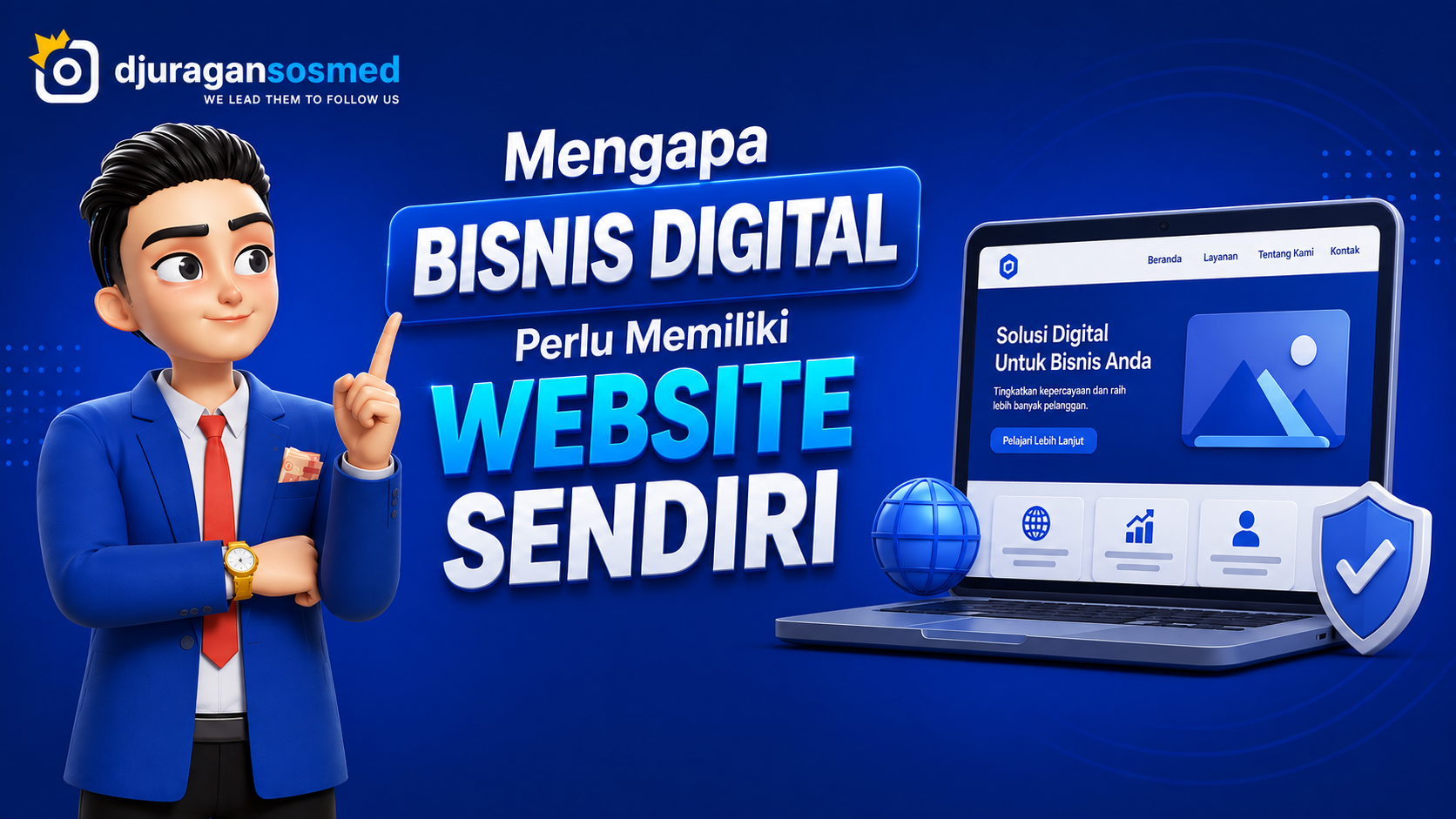
Why Digital Businesses Need Their Own Website
Digital businesses today can grow through various platforms, from social media to marketplaces. These platforms can certainly help businesses reach more people. However, relying entirely on third-party platforms also means businesses have limited control over their own digital assets.
A website provides businesses with a space to build their identity, share information, and create a more controlled experience for potential customers.
A Website Becomes Your Digital Home
Social media is highly effective for attracting attention and building communication with audiences. However, its features, appearance, and policies are still controlled by each platform.
A website is different. Businesses have greater control over their page structure, the information they display, and how visitors discover and understand the business.
For this reason, a website can serve as a digital home and become the central source of business information.
Building Trust Becomes Easier
When people discover a business through social media, they often look for additional information before making a decision.
A website can provide important details such as services, business profiles, ordering instructions, frequently asked questions, and relevant articles.
Well-organized information makes it easier for potential customers to understand a business without having to search across multiple platforms.
Reduce Dependence on a Single Platform
Social media algorithms can change. Content reach can also increase or decrease without being fully controlled by business owners.
If all marketing activities depend on a single platform, these changes can have a direct impact on the business.
Having a website helps create a digital asset that can continue to be used even when social media strategies or platform conditions change.
A Website Supports SEO Strategies
A website also creates opportunities for businesses to be discovered through search engines.
Articles, service pages, and informative content created with an SEO strategy can attract visitors who are actively searching for specific topics, products, or solutions.
Over time, this content can become a source of traffic that does not rely solely on the latest social media posts.
More Control Over the Visitor Experience
A website allows businesses to design the visitor journey according to their goals.
For example, visitors can be directed from an article to a service page and then to ordering or contact information. This type of journey can be more difficult to control when all business information is scattered across different platforms.
With the right structure, a website is not simply a place to display information. It can also become an important part of a digital marketing strategy.
Websites and Social Media Work Together
Having a website does not mean businesses need to abandon social media.
Instead, both channels can complement each other. Social media can help businesses increase reach and engagement, while a website can serve as a central place where visitors find more complete information.
For a business like Djuragansosmed, having a website also makes it easier for potential users to discover service information, understand available features, and learn more about the business.
Conclusion
Having your own website gives a digital business a more stable asset for building identity, trust, and an online presence. Social media remains important for reaching audiences, but a website provides greater freedom to manage business information and the visitor experience.
Therefore, a website should not be viewed merely as an additional feature. When managed properly, it can become one of the important foundations of a long-term digital strategy.
FAQ
1. Does a small business need a website?
Yes. A website can help a small business appear more professional and provide a dedicated place to share information with potential customers.
2. Is a website still important if a business is already active on social media?
Yes. Social media and websites serve different purposes. Social media helps businesses reach audiences, while a website provides greater flexibility for managing and presenting business information.
3. Can a website help attract customers?
Yes. A website with clear information and relevant content can potentially attract visitors from search engines and guide them toward the services offered.
4. Does a website need to have many pages?
Not necessarily. The number of pages should depend on the needs of the business. What matters more is that important information is easy for visitors to find and understand.
5. How does a website relate to social media?
Websites and social media can support each other. Social media can be used to attract attention, while a website provides a place where visitors can access more complete information.