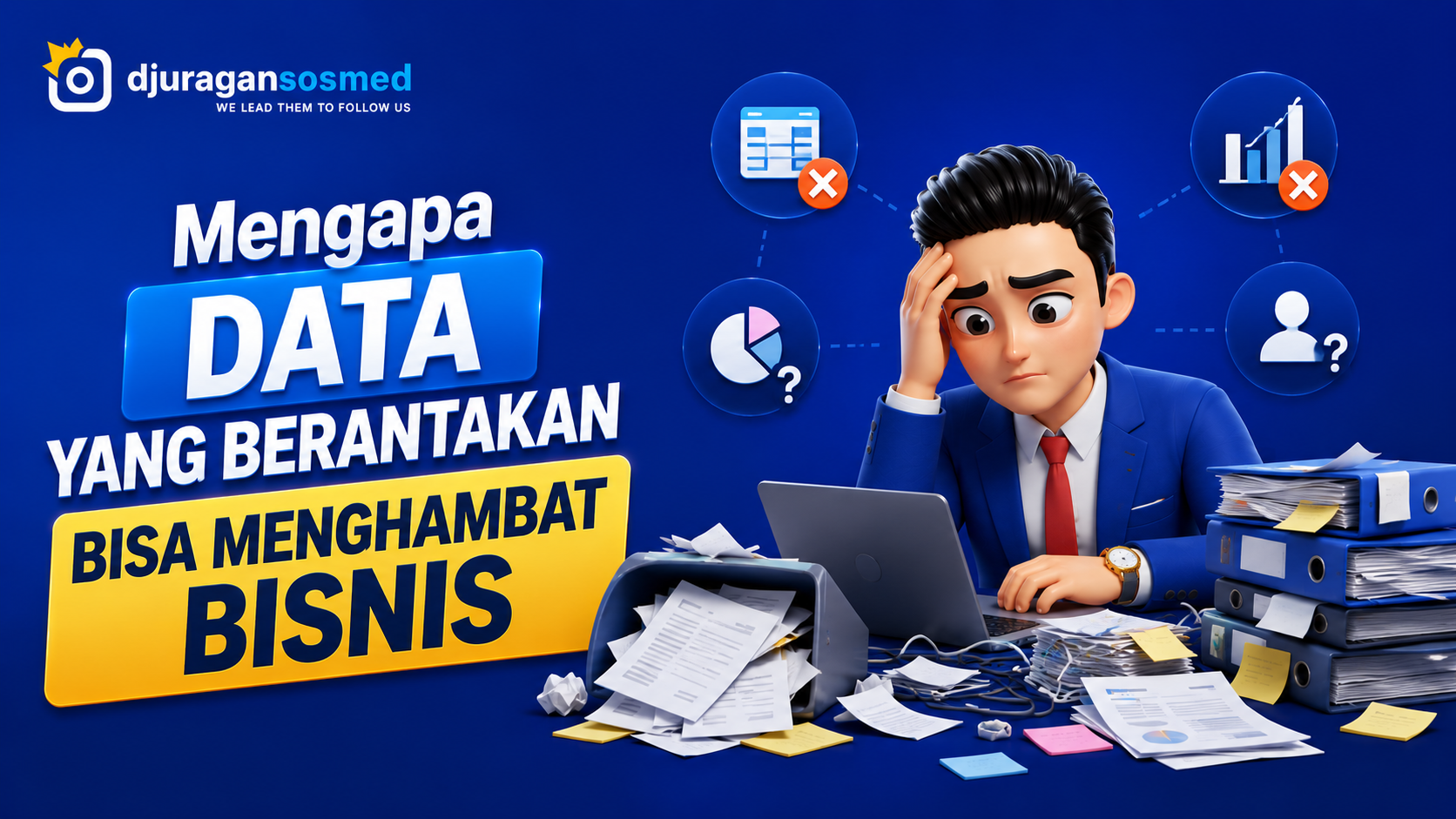
Why Disorganized Data Can Hold a Business Back
Data is one of the most valuable assets for a business. Information about customers, sales, inventory, marketing, and social media performance can help companies decide what to do next.
However, having too much data without proper organization can create new problems. When information is stored in different places, uses inconsistent formats, or is difficult to find, daily operations become slower and business decisions may become less accurate.
What Is Disorganized Data?
Disorganized data does not mean the information is useless. The problem is usually how the data is collected, stored, and used.
For example, customer information may be stored in different spreadsheets, transaction records may remain in chat conversations, while marketing data is kept on another platform. When all of this information is needed at once, the team has to spend extra time collecting and combining it.
This may not seem like a serious issue when a business is still small. But as the number of customers and transactions grows, the impact can become much more noticeable.
Why Can Disorganized Data Slow Down a Business?
1. It Makes Work Slower
Employees can spend a significant amount of time looking for information that already exists.
Instead of focusing on their main tasks, they may need to open multiple files, search through old conversations, or ask another team for information. When this happens regularly, a considerable amount of working time can be lost.
2. It Increases the Risk of Errors
Poorly organized data is more likely to contain duplicate or incorrect information.
For example, the same customer may appear twice with different details. If this data is used for reports or customer communication, the business may make decisions based on inaccurate information.
3. It Makes Decision-Making More Difficult
Business decisions should be supported by clear information.
When sales reports, customer data, and marketing results are not properly organized, business owners may struggle to understand the actual situation. As a result, decisions may rely more on assumptions than facts.
4. It Makes Strategy Evaluation Less Effective
Every marketing strategy needs to be evaluated. Businesses need to know which content performs well, which products attract the most interest, and where customers are coming from.
When data is scattered across different sources and does not follow a consistent format, comparing results becomes more difficult. Regular evaluation is important to identify which strategies should be maintained and which ones need improvement.
5. It Can Limit Business Growth
Well-organized data helps businesses operate more efficiently. On the other hand, increasingly complicated data management can become a burden as customer numbers and transactions continue to grow.
That is why businesses should pay attention to data management early instead of waiting until the problem becomes difficult to handle.
How Can Businesses Organize Their Data?
A complicated system is not always necessary to improve data management. Businesses can start with a few simple steps.
First, determine a main storage location for each type of data. Second, use consistent formats so information can be compared more easily. Third, review the data regularly to remove duplicates and information that is no longer relevant.
Businesses can also use digital tools to support data management and automation. This can reduce manual work and make important information easier for the right team members to access.
Organized Data Helps Businesses Move Faster
Data is more than just a collection of numbers and information. When managed properly, it can help businesses understand customers, evaluate strategies, and set priorities more clearly.
On the other hand, disorganized data can create additional work, increase the risk of errors, and slow down decision-making.
For businesses that actively use social media, proper data management can also support content performance analysis and marketing evaluation. Djuragansosmed can support social media activities, while well-organized data helps businesses better understand the results of the strategies they use.
Conclusion
Disorganized data can become an overlooked obstacle for businesses. The problem is not simply about having difficulty finding information. It can also affect productivity, reporting accuracy, marketing evaluation, and decision-making.
By developing consistent data management habits, businesses can work more efficiently and build a stronger foundation for future decisions.
FAQ
What is disorganized business data?
Disorganized business data is information that is poorly structured, stored in different places, uses inconsistent formats, or contains inaccurate records.
Do small businesses need proper data management?
Yes. Managing data properly from the beginning can make it easier for a business to adapt as customers, transactions, and daily activities increase.
What are the main effects of disorganized data?
Common effects include slower work, a higher risk of errors, and more difficulty making informed business decisions.
How can a business start organizing its data?
Start by grouping information by type, choosing a main storage location, using consistent formats, and reviewing the data regularly.
Can technology help businesses manage their data?
Yes. Spreadsheets, business management software, CRM systems, and automation tools can help businesses store and manage information more efficiently.
How is data related to social media strategy?
Data can help businesses measure content performance, understand audience responses, and evaluate marketing strategies so future decisions can be more focused.