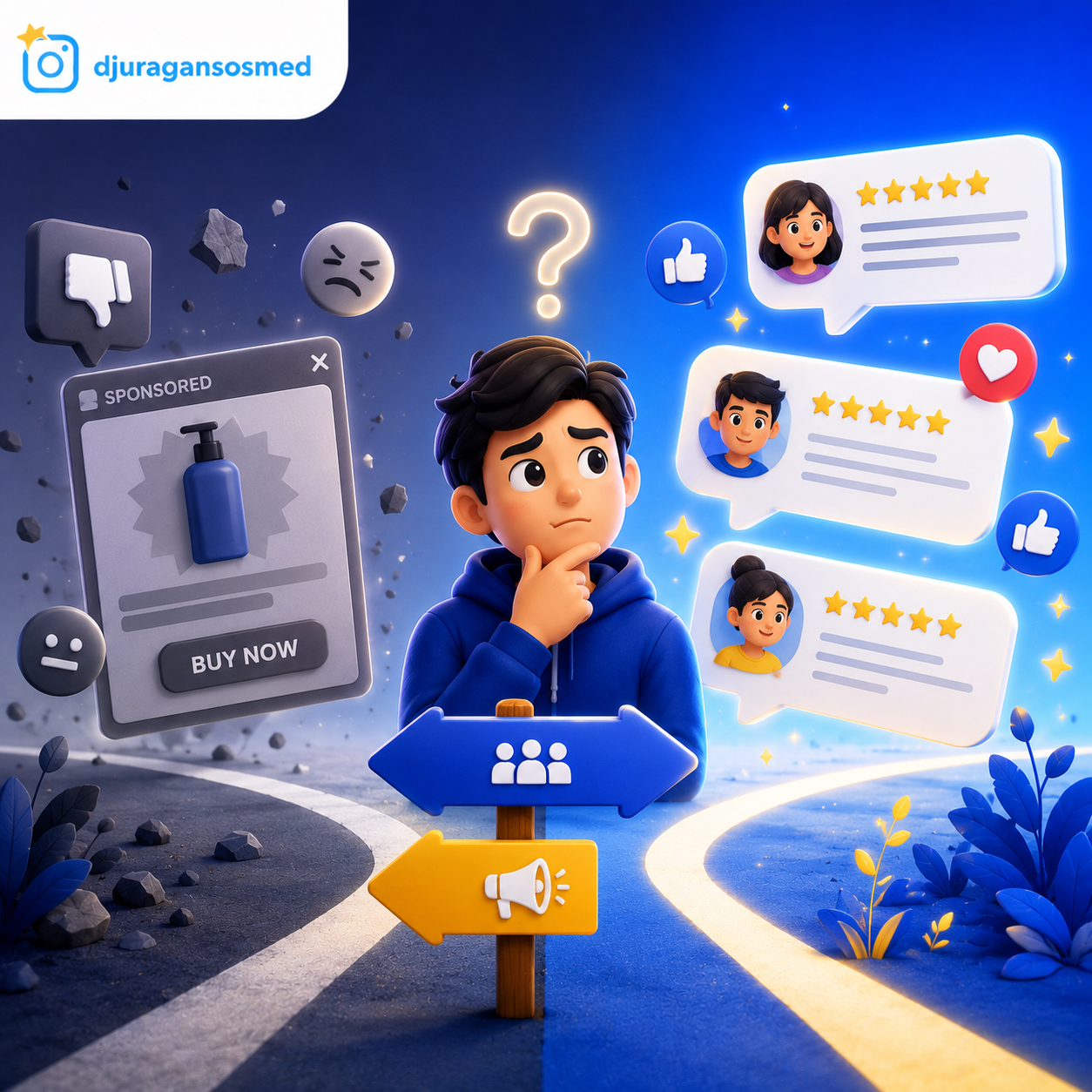
Why Do People Trust Comments More Than Advertisements? The Answer Goes Beyond Testimonials
Imagine you're looking for a product online.
You come across two options.
The first product is backed by a beautifully designed advertisement with impressive visuals.
The second has a much simpler promotion, but hundreds of customers have shared their experiences in the comment section.
Without even realizing it, most people will scroll through the comments before making a decision.
Why?
After all, the advertisement already explains everything about the product.
The answer is simple.
People naturally trust other people more than they trust brands.
Comments Are a Form of Social Proof
In marketing, there's a psychological principle known as social proof.
It explains why people tend to follow decisions that others have already made.
When potential customers see dozens—or even hundreds—of positive comments, they often think,
"If so many people had a good experience, there's a good chance I will too."
An advertisement tells the story the business wants to tell.
Comments, on the other hand, reflect real experiences from customers.
That's what makes them feel more authentic.
Why Major Brands Pay Close Attention to Their Comment Sections
Many people assume large companies only focus on creating better advertisements.
In reality, they pay just as much attention to customer feedback, reviews, and conversations happening across social media.
One positive comment can strengthen trust.
One negative experience that spreads online can influence hundreds of future buying decisions.
That's why communication after the sale has become just as important as marketing before the sale.
Modern Consumers Always Look for Validation
Before making a purchase, most people do a little research.
They read reviews.
Browse comment sections.
Compare customer experiences.
And often seek confirmation before spending their money.
This behavior has become increasingly common because information is available within seconds.
Today, purchasing decisions are influenced less by how attractive an advertisement looks and more by how much trust a business has earned.
Comments Are More Than Positive Feedback
Many businesses hope every customer leaves a positive review.
Surprisingly, a comment section that looks completely perfect isn't always the most convincing.
When a company answers questions openly, responds professionally to criticism, and solves customer problems publicly, it demonstrates accountability.
Trust isn't built because a business appears flawless.
It's built because customers see how the business handles real situations.
Fast Responses Shape Customer Perception
Not every comment requires a lengthy reply.
However, customers want to know they're being heard.
A quick response creates the impression that a business genuinely values its audience.
On the other hand, unanswered questions often create uncertainty before a purchase is made.
In many cases, responsive communication turns curious visitors into loyal customers.
In the Digital Era, Conversations Matter Just as Much as Advertising
Social media has completely changed how businesses connect with customers.
In the past, marketing was mostly about attracting attention.
Today, customers also evaluate how brands respond to questions, handle criticism, and communicate after a purchase has been made.
For many businesses, the quality of these conversations has become just as important as the advertising budget itself.
The stronger the interaction between a brand and its audience, the stronger the long-term relationship becomes.
Technology Should Reduce Work—Not Create More of It
Many entrepreneurs believe that technological progress automatically makes running a business more complicated.
In reality, technology exists to accomplish the exact opposite.
Its purpose is to simplify repetitive tasks so business owners can focus on work that truly creates value.
When operational processes become more efficient, businesses gain more time to understand customer needs, improve service quality, strengthen communication, and develop long-term growth strategies.
This philosophy is reflected in the way Djuragansosmed continues to develop its digital ecosystem.
Rather than simply offering social media services, the platform is designed to help users manage their digital activities more efficiently, allowing them to spend less time on repetitive operational tasks and more time creating ideas, building stronger customer relationships, and expanding their businesses.
Ultimately, the most valuable technology isn't the one with the longest feature list.
It's the technology that genuinely makes work easier.
Trust Always Begins with a Conversation
Advertisements can capture attention.
But trust is usually built through the experiences shared by other people.
A genuine customer comment, a timely response, or the way a business handles a problem often carries far more influence than an expensive advertising campaign.
In today's digital world, customers don't only evaluate products.
They also evaluate how brands treat people.
And meaningful relationships almost always begin with honest communication.
Conclusion
In an increasingly competitive digital landscape, attracting attention is only the first step.
The businesses that continue to grow are those capable of transforming attention into trust and trust into long-term customer relationships.
Comments, reviews, and everyday interactions have become powerful factors influencing purchasing decisions.
That's why businesses need more than quality products or services.
They also need efficient systems that simplify daily operations, allowing them to dedicate more time to listening to customers, improving experiences, and building relationships that support sustainable growth.