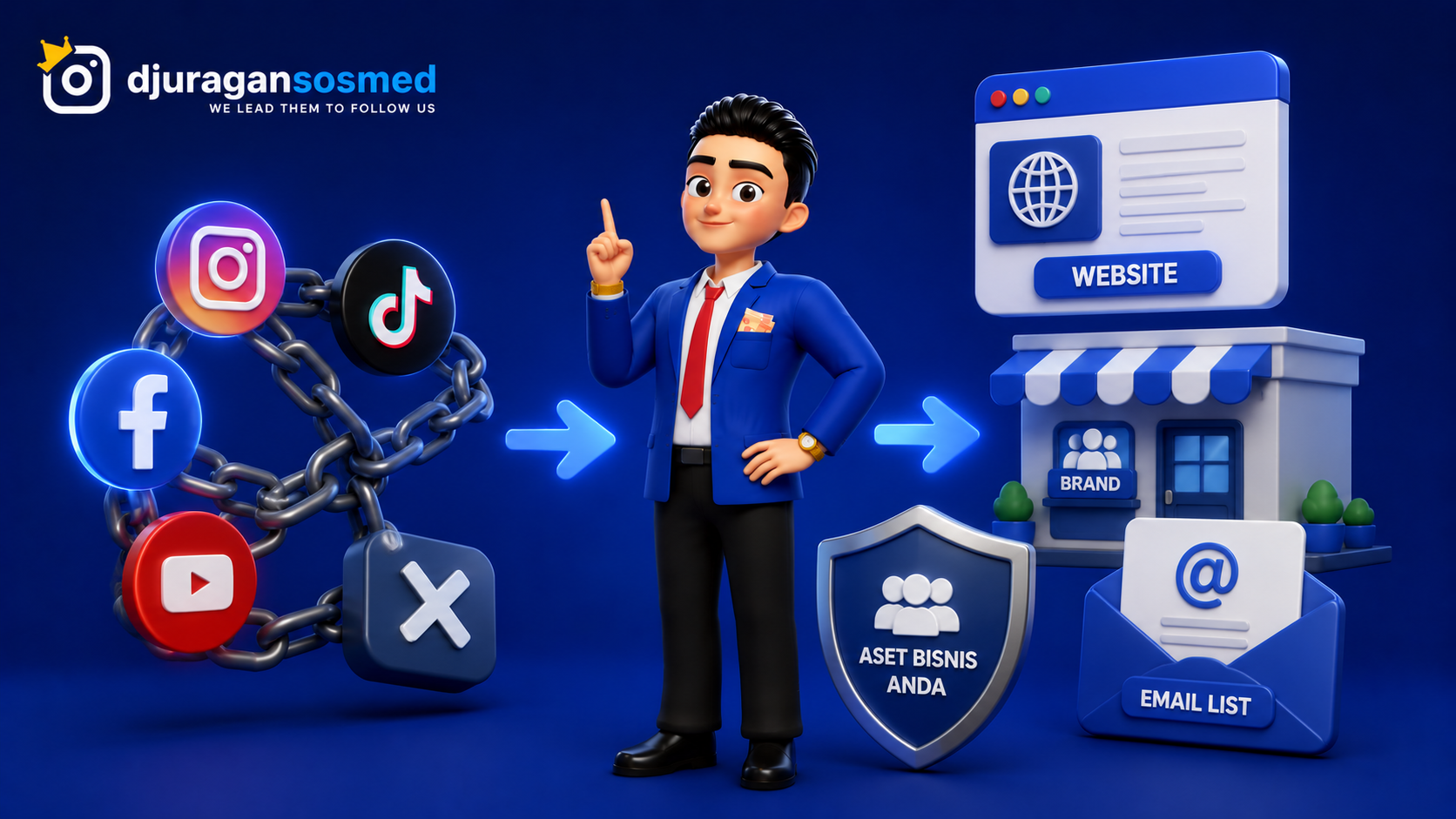
How to Reduce Business Dependence on Digital Platforms
Today, many businesses acquire customers through social media, marketplaces, search engines, and other digital platforms. These platforms make it easier for businesses to reach more people and promote their products or services.
However, relying too heavily on a single platform can create risks. Algorithm changes, new policies, reduced reach, or system disruptions can directly affect business activities.
That is why businesses need to build their own assets and channels so they are not completely dependent on third-party platforms.
Why Can Dependence on Digital Platforms Become a Problem?
Digital platforms provide access to large audiences, but businesses do not have complete control over how those platforms operate.
Even small changes can have a significant impact, such as:
- Reduced content reach
- Higher advertising costs
- Account restrictions
- Algorithm changes
- Certain features being discontinued
- Increasing competition
If all customers come from one platform, these changes can directly affect business revenue.
Build a Website as a Business Asset
A website can become an information hub that a business controls directly.
Use your website to provide:
- Product or service information
- Business profiles
- Contact and customer service information
- Educational articles
- Portfolios
- Special offers
Having a website means a business does not have to rely entirely on social media profiles or marketplace pages to provide information to potential customers.
Build a Customer Database
Do not let the relationship with customers end after a transaction.
Businesses can build a customer database legally and with customer consent through:
- Email newsletters
- Loyalty programs
- Registration forms
- Membership programs
- Purchase history
A well-managed database allows businesses to communicate with customers without always depending on platform algorithms.
Do Not Rely on Just One Social Media Platform
Every platform has different characteristics and audiences.
Businesses should build a presence across several relevant channels. For example, social media can be used to reach audiences, while a website can provide more complete information.
With this approach, when the performance of one platform declines, the business still has other channels to communicate with customers.
Build a Brand That People Remember
Dependence becomes greater when customers only remember the platform where they discovered a business rather than remembering the brand itself.
That is why businesses should maintain consistency in:
- Brand name
- Logo
- Communication style
- Content
- Customer experience
The goal is to make it easier for customers to search for the business directly instead of always discovering it through a particular platform.
Strengthen Customer Relationships
Businesses with strong customer relationships do not have to rely entirely on algorithms to gain attention.
Give customers reasons to stay connected through useful content, good service, communities, or loyalty programs.
Strong relationships can encourage customers to make repeat purchases and recommend the business to others.
Use Platforms as Channels, Not Your Only Asset
Social media, marketplaces, and other digital platforms still play an important role in marketing.
However, businesses should treat these platforms as channels for reaching audiences, rather than as the only place where the business depends on customers.
Audiences can then be directed appropriately toward business-owned assets such as websites, customer databases, or communities.
Build a System That Does Not Depend on One Source
Business independence does not mean abandoning digital platforms.
What matters is having multiple sources for acquiring customers and maintaining relationships with them.
For example:
Social Media → Website → Purchase → Customer Database → Repeat Purchase
With this flow, businesses can build a stronger system and become less vulnerable to changes on a single platform.
The Role of Djuragansosmed in Supporting Social Media Presence
Reducing dependence on platforms does not mean ignoring social media. Social media can still be an important channel for introducing a brand and reaching new audiences.
Djuragansosmed provides various Social Media Marketing services that can help businesses improve their account performance and expand their reach across different digital platforms.
By combining social media with websites, customer databases, and other marketing strategies, businesses can build a more balanced digital ecosystem.
Conclusion
Digital platforms provide many opportunities for businesses, but relying too heavily on one platform can increase risks.
Businesses need to build more independent assets through websites, customer databases, strong branding, and direct relationships with customers.
By using digital platforms as one part of a broader marketing strategy rather than the only source of customers, businesses can become better prepared for changes in algorithms, policies, and digital trends.
FAQ
1. Should businesses stop using social media?
No. Social media remains important for reaching audiences and introducing a brand. The key is to avoid becoming completely dependent on one platform.
2. Why is a website important for a business?
A website can serve as a central information hub controlled directly by the business without relying entirely on social media algorithms.
3. What are the benefits of having a customer database?
A customer database helps businesses build long-term communication with customers who have given permission to receive information.
4. Is using multiple platforms always better?
Not necessarily. Choose platforms that match your target audience and your business's ability to manage them effectively.
5. How can businesses reduce their dependence on social media?
Build a website, customer database, strong brand, community, and multiple marketing channels so the business does not rely on a single source.