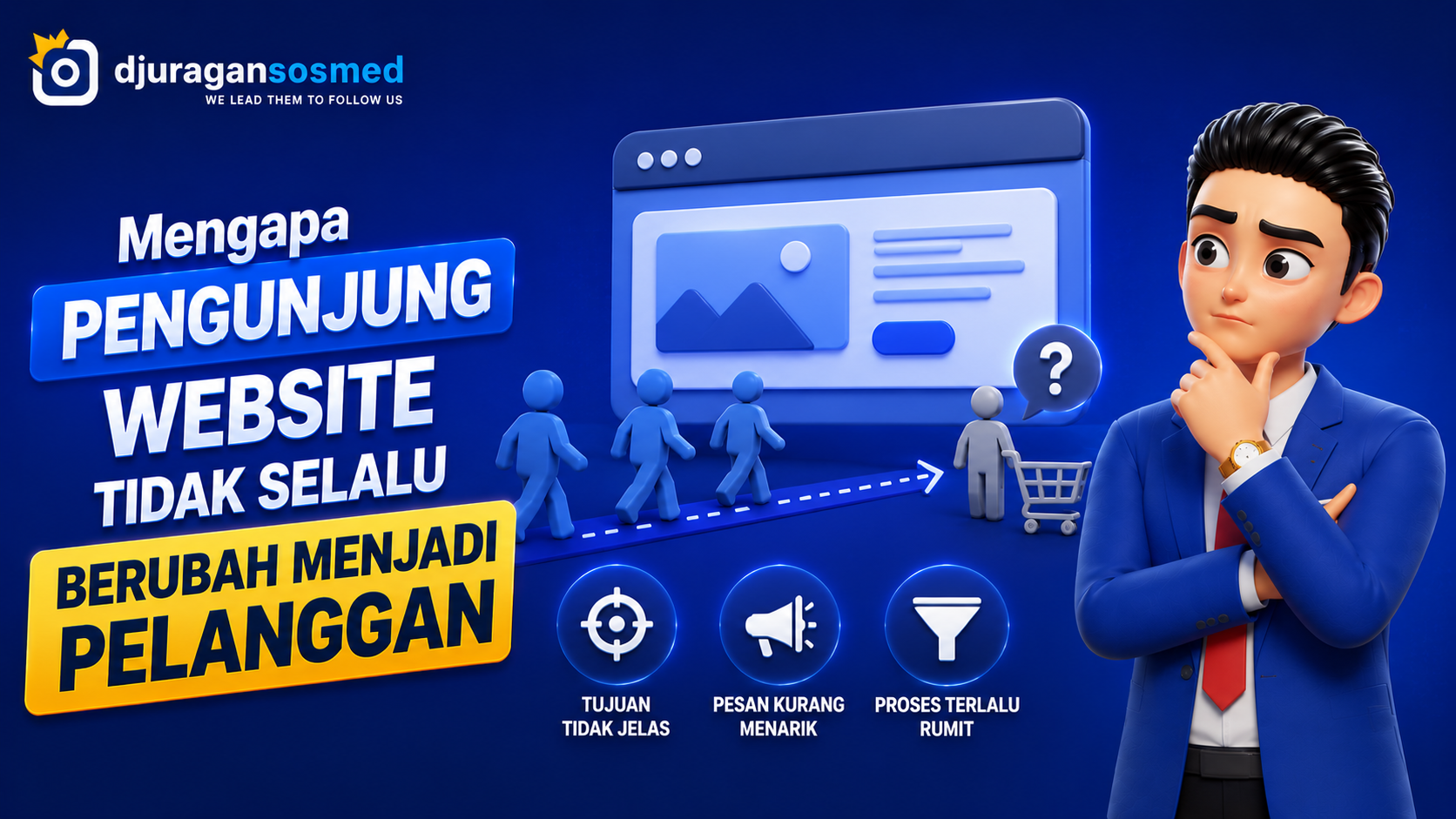
Why Website Visitors Do Not Always Become Customers
Bringing a large number of visitors to a website is one of the goals of digital marketing. However, high website traffic does not always lead to more customers.
People may visit a website after seeing an advertisement, finding it through a search engine, or discovering it through social media. After browsing a few pages, they may leave without making a purchase.
This situation is quite common. The problem is not always the amount of traffic, but what visitors experience after they arrive on the website.
Website Visitors Are Not Always Ready to Buy
Not everyone who visits a website is looking for a product to purchase.
Some visitors may simply want to find information, compare prices, explore available options, or understand a product before making a decision. For this reason, traffic should not automatically be considered a group of potential customers who are ready to buy.
Businesses need to understand visitors' intentions so they can provide information that matches their stage in the buying process.
Reasons Visitors Do Not Continue to Purchase
Product Information Is Not Clear Enough
Visitors need information that helps them understand what a business offers. If product descriptions are too brief, difficult to understand, or fail to answer important questions, visitors may look for information elsewhere.
Prices, benefits, features, terms, and other relevant details should be presented clearly.
The Website Is Difficult to Use
An attractive website does not help much if visitors find it difficult to navigate.
Confusing menus, crowded pages, hard-to-find buttons, or lengthy purchasing processes can make visitors lose interest. A simple user experience makes it easier for them to move to the next step.
There Is No Strong Reason to Take Action
Visitors may be interested in a product but still lack a strong reason to take action.
Relevant offers, clear benefits, and appropriate calls to action can help visitors decide what to do next without making them feel pressured.
Trust Has Not Been Established
Before making a purchase, potential customers usually want to know whether a business is trustworthy.
Contact information, customer reviews, service details, clear policies, and a professional website can help reduce doubts.
Trust becomes even more important when visitors are discovering a business for the first time.
How to Increase the Chances of Turning Visitors into Customers
Understand Where Your Traffic Comes From
Pay attention to where visitors come from. Traffic from search engines, social media, advertisements, and other sources may have different characteristics.
By understanding each source, businesses can adjust their content and offers to better match visitor needs.
Make the User Journey Simpler
Visitors should not have to search for too long to find important information.
Use a clear page structure and guide visitors step by step from information toward the desired action.
Use Clear Calls to Action
Pages designed to generate conversions should have clear directions for visitors.
For example, businesses can use buttons that encourage visitors to make a purchase, sign up, contact the business, or learn more about a service. A clear call to action helps visitors understand what they can do next.
Analyze Visitor Behavior
Website traffic alone is not enough to measure performance. Businesses should also look at the most visited pages, visit duration, traffic sources, and points where visitors leave the website.
This data can help identify which parts of the website need improvement.
A Website Is More Than Just a Place to Generate Traffic
High traffic may look impressive, but its real value depends on what happens after visitors arrive.
A website that provides clear information, a comfortable experience, and relevant reasons to take action has a better chance of turning visitors into customers.
Therefore, digital marketing should not focus only on attracting more people. It should also focus on creating a convincing experience once visitors arrive on the website.
Conclusion
Not every website visitor arrives with the intention of making an immediate purchase. Some may still be looking for information, comparing options, or deciding whether they can trust a business.
If many visitors are not becoming customers, businesses should evaluate the experience provided by their website. Clear information, simple navigation, trust, effective calls to action, and data analysis can help improve conversion opportunities.
For businesses actively building their presence across different digital platforms, attracting a relevant audience is also an important part of the process. Djuragansosmed can support social media marketing needs so businesses can build a more targeted digital presence and reach.
FAQ
Does having many website visitors mean a business is successful?
Not necessarily. Traffic shows the number of visits, but it does not indicate how many visitors take actions such as making a purchase, signing up, or contacting the business.
Why do visitors leave a website after viewing only a few pages?
There can be several reasons, including unclear information, difficult navigation, a mismatch with visitor needs, or a lack of trust in the business.
What is a website conversion?
A conversion is a desired action taken by a visitor, such as making a purchase, submitting a form, signing up, contacting a business, or completing another specific action.
How can businesses increase website conversions?
Start by improving the clarity of information, simplifying navigation, using clear calls to action, building trust, and analyzing visitor behavior.
Can social media traffic generate customers?
Yes. However, the results depend on audience relevance, content quality, the offer, and the experience visitors receive after moving from social media to the website.