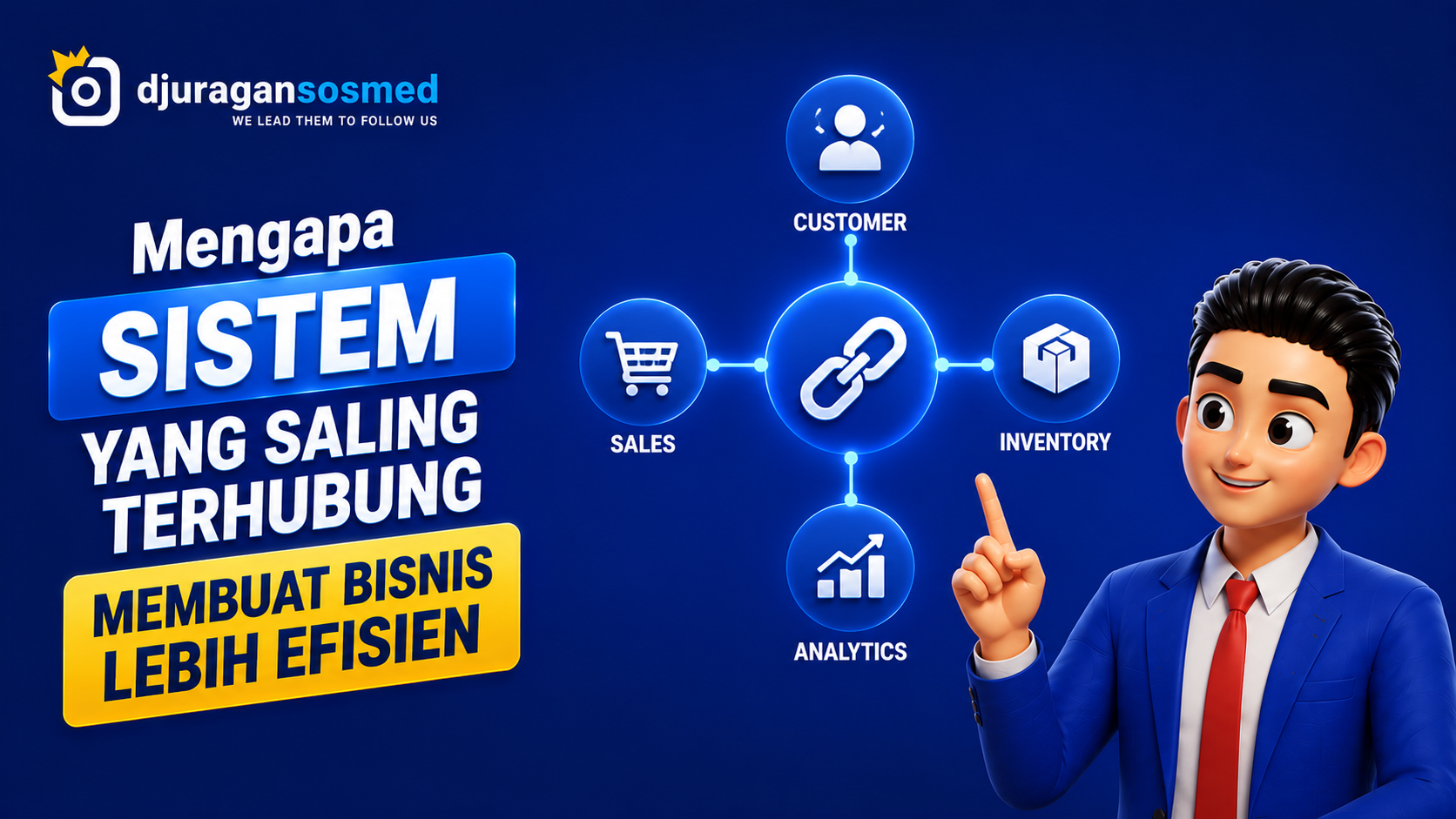
Why Connected Systems Make Businesses More Efficient
Businesses rely on many different systems to manage their daily activities. There may be systems for recording sales, managing customers, monitoring inventory, processing payments, and handling marketing activities.
Problems can arise when each system operates separately. Data may need to be transferred manually, information can become outdated, and the same task may have to be completed more than once.
Connected systems help reduce these problems. When different parts of a business can exchange data automatically, workflows become simpler and information becomes easier to use.
What Are Connected Systems?
Connected systems are different applications or platforms that can exchange information and work together according to a business's needs.
For example, when a customer makes a purchase through a website, the transaction information can be sent directly to the sales system. The data can then be used by the inventory and customer management systems without requiring the same information to be entered repeatedly.
The goal is not simply to connect multiple applications, but to create a more organized workflow.
Why Are Connected Systems Important for Businesses?
1. Reducing Manual Work
Without integration, employees may need to copy data from one system to another. Besides taking time, this process can increase the risk of errors.
With connected systems, some processes can run automatically. Teams can spend more time on tasks that require analysis and decision-making.
2. Keeping Data Consistent
Data stored in different places may not always match. For example, customer information in a sales system may differ from the data used by the marketing team.
Integration helps information stay updated more consistently. This allows different parts of a business to work with more aligned data.
3. Providing Faster Access to Information
Business decisions often require information from multiple sources. If data has to be collected one system at a time, the process can take longer.
Connected systems allow information to flow more easily between different departments. Teams can access the information they need without going through too many additional processes.
4. Reducing Errors in Workflows
Input errors can occur when the same information is entered multiple times by different people. Even a small mistake can affect reports or subsequent processes.
Automated data exchange can reduce the dependence on manual input, making workflows more accurate.
The Impact on Customer Experience
Connected systems do not only benefit internal business operations. Customers can also experience the impact.
When order, payment, inventory, and customer service information are connected, service processes can run more efficiently. Teams can also understand customer interaction history more easily.
This helps businesses provide a more consistent experience across different customer touchpoints.
Connected Systems Help Businesses Grow
As a business grows, the amount of data and the number of processes it manages also increase. Systems that are not integrated can become a challenge as transaction and customer volumes rise.
Systems designed to work together give businesses a stronger foundation for growth. Adding new processes or services can also become more structured.
However, integration still needs to be planned carefully. Not every system needs to be connected immediately. Businesses should identify the processes that would benefit most from automation and data sharing.
Conclusion
Connected systems help businesses work faster, reduce repetitive tasks, maintain consistent data, and make decision-making easier.
Efficiency is not only about completing tasks quickly. Businesses also need to ensure that each process supports the others so that time, data, and resources can be used more effectively.
For businesses that rely heavily on digital activities, social media management is also part of this process. Djuragansosmed can support social media service needs, making digital management more practical and helping businesses maintain their online activities.
FAQ
What are connected business systems?
Connected business systems are applications or platforms that can exchange data and work together as part of a business workflow.
What are the main benefits of integrated systems?
The main benefits include reducing manual work, providing faster access to information, maintaining data consistency, and reducing errors.
Do small businesses need connected systems?
Yes. Small businesses can start with simple integrations for frequently performed processes to improve efficiency.
Does every business system need to be integrated?
No. Integration should be based on business needs and the processes that can provide the greatest operational benefits.
How do connected systems help customers?
Data that flows between different departments can help businesses provide faster, more consistent service based on customer information and interaction history.
What should businesses consider before connecting systems?
Businesses should consider their needs, data security, workflow, costs, and the ability of each system to integrate with others.