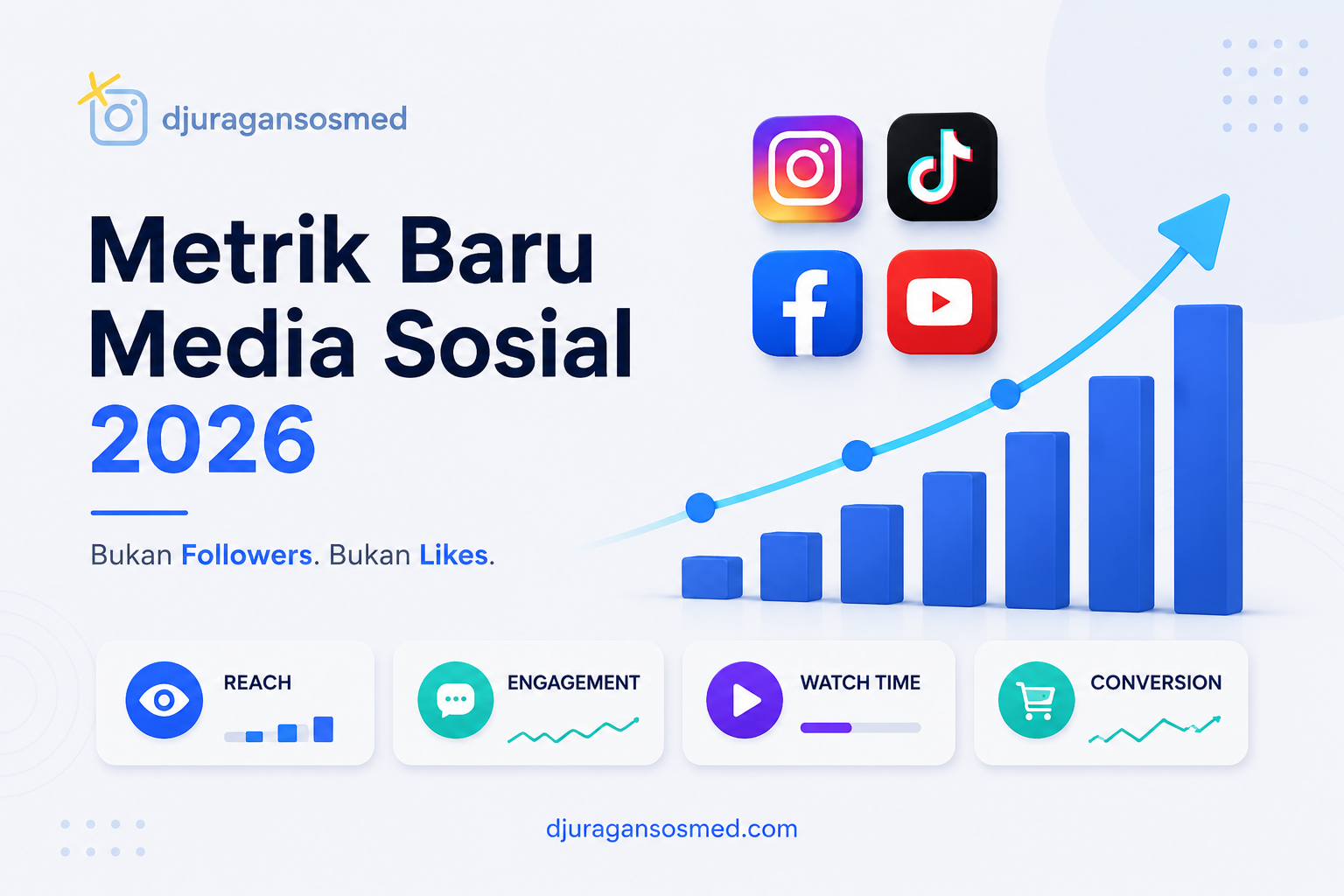
Not Followers, Not Likes: The New Metrics That Define Social Media Success in 2026
A few years ago, social media success was often measured by two simple numbers: followers and likes.
In 2026, however, the reality looks very different.
Many accounts with hundreds of thousands of followers are experiencing declining reach and engagement.
At the same time, smaller accounts are generating more sales, leads, and meaningful interactions despite having significantly fewer followers.
This shift has led many business owners to ask an important question:
Do followers still matter?
The answer is yes—but they are no longer the primary factor.
Today's social media platforms prioritize the quality of interactions rather than the size of an audience.
Why Followers Are No Longer the Main Success Metric
In the past, having more followers generally meant greater visibility.
Today, social media algorithms are far more sophisticated.
Instagram, TikTok, and YouTube no longer distribute content based solely on follower count.
Instead, they evaluate how audiences respond to content.
This is why accounts with highly engaged communities often outperform larger accounts with passive followers.
As a result, many brands are shifting away from growth strategies focused purely on numbers and are investing more in community-building and audience relationships.
The Metrics That Matter Most in 2026
One of the biggest changes in social media marketing is the emergence of new performance indicators that better reflect content quality and audience interest.
1. Watch Time
Watch time has become one of the most important ranking factors.
The longer users spend watching your videos, the more likely platforms are to recommend your content to others.
This is why many creators now focus on producing videos that maintain audience attention from start to finish.
2. Save Rate
Instagram places significant value on content saves.
When users save a post, the algorithm interprets it as highly useful and relevant.
Educational content, tutorials, checklists, guides, and actionable tips often generate higher save rates than promotional content.
3. Share Rate
In 2026, shares are among the strongest signals for content distribution.
When users share content with friends, colleagues, or communities, platforms recognize it as valuable information.
Content that sparks discussion or provides practical solutions tends to achieve stronger sharing performance.
4. Returning Audience
Another increasingly important metric is the number of users who repeatedly return to your profile.
A growing returning audience indicates that people find ongoing value in your content.
This is one reason consistency has become more important than ever.
5. Community Interaction
Modern social media platforms prioritize conversations over simple reactions.
Meaningful comments, active replies, and community discussions significantly influence content visibility.
Many successful brands now dedicate more time to nurturing communities rather than simply publishing more posts.
Why Many Businesses Still Focus Too Much on Followers
One reason is that followers are highly visible.
They are displayed prominently on every profile and are often perceived as a shortcut for measuring success.
However, today's consumers are much more sophisticated.
They evaluate factors such as:
Account activity
Content quality
Brand credibility
Trust is no longer built solely through audience size—it is built through consistent value and genuine interaction.
Social Search Is Changing How People Discover Businesses
Another major trend reshaping digital marketing is Social Search.
Increasingly, users search directly on Instagram, TikTok, and YouTube instead of relying exclusively on traditional search engines.
People are now looking for:
Product reviews
Service recommendations
Business advice
Travel destinations
This means every piece of content you create can become an entry point for potential customers.
As a result, content quality has become far more important than posting frequency.
AI Can Accelerate Content Creation, But It Cannot Replace Trust
Artificial Intelligence is transforming content production.
Businesses are using AI for:
Copywriting
Graphic design
Audience analysis
Keyword research
Video editing
Yet one critical element remains irreplaceable:
Trust.
People continue to follow and buy from accounts that demonstrate real experience, authentic communication, and unique perspectives.
This is why personal branding and community relationships are becoming increasingly valuable assets.
What Fast-Growing Brands Are Doing Differently
Brands that continue growing in 2026 typically share several characteristics.
They:
Focus on audience quality
Create value-driven content
Build strong communities
Invest in short-form video
Analyze data consistently
Adapt quickly to algorithm changes
They are not obsessed with going viral every day.
Instead, they focus on building long-term credibility and trust.
This approach often results in more stable and sustainable growth.
Adaptability Is the Key to Digital Growth
Social media will continue to evolve.
Algorithms will change.
Trends will shift.
Technology will advance.
However, one thing remains constant:
The importance of understanding your audience.
Businesses that adapt faster are more likely to thrive in an increasingly competitive digital environment.
In this landscape, having a clear strategy often matters far more than simply posting more content.
Organizations that prioritize audience insights, content relevance, and long-term relationship building are positioning themselves for stronger digital growth in the years ahead.
Conclusion
The year 2026 marks a significant shift in how social media platforms evaluate success.
Followers and likes still matter, but they are no longer the dominant performance indicators.
Watch time, save rate, share rate, community interaction, and returning audience metrics now play a much larger role in determining content visibility and account growth.
Businesses that understand these changes will have a greater opportunity to increase engagement, strengthen brand authority, and remain competitive in the evolving digital landscape.
Sustainable social media growth comes from strategic planning, audience understanding, and consistently delivering content that people genuinely find valuable.