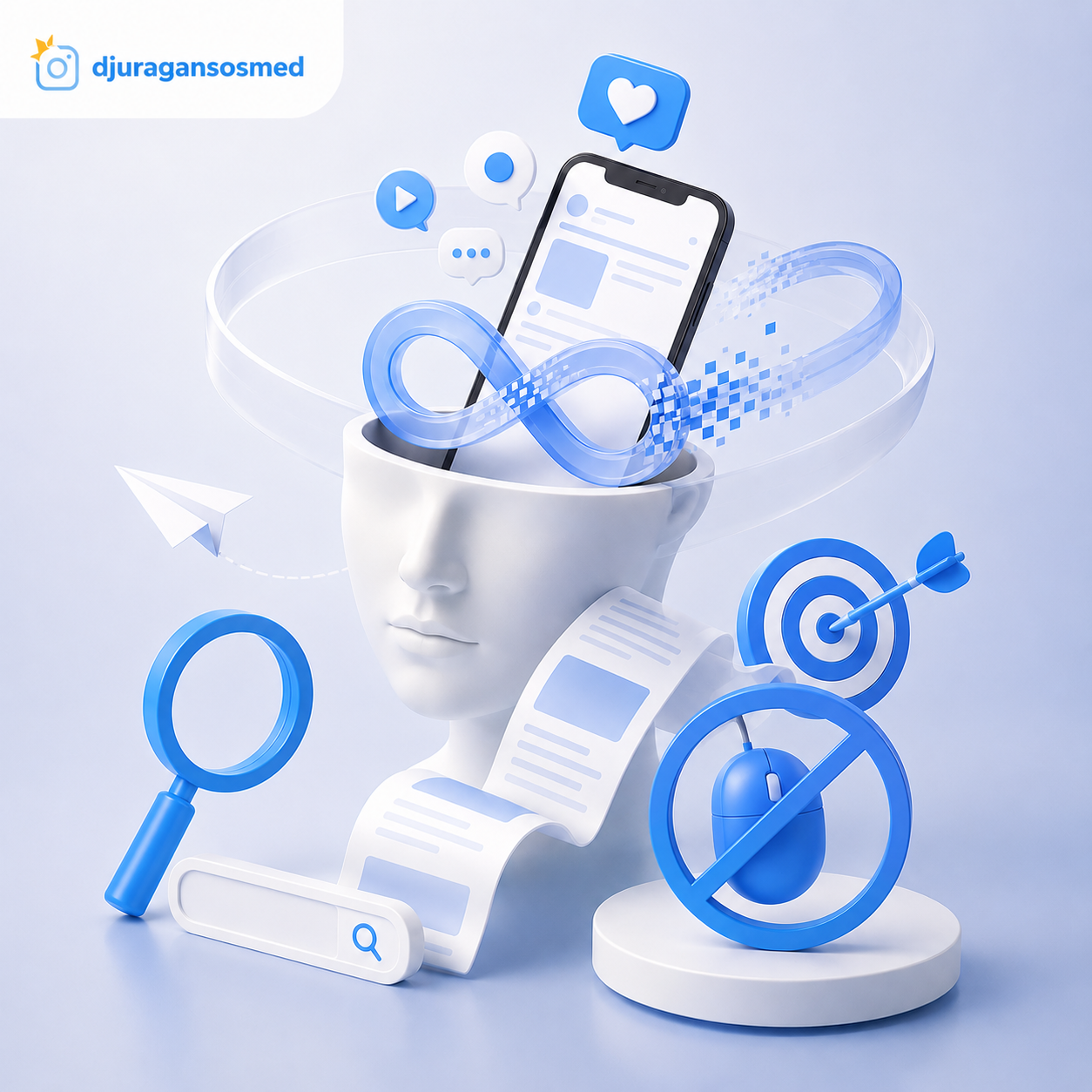
Zero Click Marketing: A New Challenge for SEO and Social Media
Have You Ever Found Information Without Clicking on a Website?
Imagine searching Google for "restaurant opening hours near me" or "how to create viral Instagram content." Before you even visit a website, the answer is already displayed directly on the search results page.
The same behavior is happening on social media. Many users now get complete information from Instagram carousels, TikTok videos, or LinkedIn posts without ever opening an external link.
This phenomenon is known as Zero Click Marketing.
It refers to a marketing approach where users receive the information they need without visiting a website or clicking on external links.
For businesses, this shift creates both new challenges and new opportunities in digital marketing.
What Is Zero Click Marketing?
Zero Click Marketing is a marketing strategy focused on delivering value directly on the platform where the audience already spends their time, rather than relying on website clicks.
In the past, campaign success was often measured by the number of clicks.
Today, marketers pay closer attention to metrics such as:
- Content reach
- Engagement time
- Saves
- Comments
- Shares
- Brand mentions
In other words, the goal is no longer just to generate clicks but to build brand awareness and trust.
Why Is Zero Click Marketing Becoming More Popular?
The biggest reason is changing consumer behavior.
People today expect information to be fast, simple, and immediately accessible.
The fewer steps required to find an answer, the more likely users are to stay on the same platform.
Several factors have accelerated this trend:
- Search engines provide direct answers through rich search features.
- Social media platforms encourage users to remain inside their apps.
- Visual content is consumed faster than long-form articles.
- Competition for user attention continues to increase.
As a result, websites are no longer the only destination in the customer journey.
Is SEO Still Important?
Absolutely.
However, the way businesses approach SEO needs to evolve.
Previously, SEO was mainly about driving as much traffic as possible to a website.
Today, SEO is also about building a strong digital presence across multiple touchpoints, including:
- Search engine results
- Google Business Profile
- YouTube videos
- Social media platforms
- Online communities
- Marketplaces
Brands that are consistently visible across different platforms tend to earn more trust than those relying on a single channel.
Social Media Has Become the New Search Engine
Younger generations increasingly search for product recommendations, restaurants, tutorials, and reviews directly on social media.
They often trust authentic content more than traditional advertising.
Because of this shift, content strategies should no longer focus solely on driving website traffic.
Instead, content should provide immediate value so users remember the brand even if they never click a link.
The New Priority: Build Trust, Not Just Clicks
In the Zero Click era, marketing success is measured differently.
Rather than focusing only on website traffic, businesses should also evaluate questions like:
- Is brand awareness increasing?
- Are people sharing the content?
- Do audiences return to future posts?
- Is engagement improving?
- Do potential customers remember the brand when they need a solution?
Trust built over time often delivers greater long-term value than short-term traffic spikes.
Strategies for Succeeding in the Zero Click Era
Businesses need to adapt their marketing strategies to remain competitive.
Here are four practical approaches:
1. Deliver Value Immediately
Don't hide all your valuable information behind a website link.
Share useful insights directly through posts, videos, or carousel content so audiences gain value instantly.
2. Build a Consistent Brand Identity
Use consistent messaging, visuals, and tone across every platform.
Consistency helps audiences recognize and remember your brand.
3. Diversify Your Digital Presence
Your website remains important as your primary information hub.
However, social media, email marketing, video platforms, and online communities all play an essential role in building customer relationships.
4. Measure More Than Website Traffic
Track metrics such as:
- Engagement rate
- Shares
- Saves
- Watch time
- Brand search volume
These indicators provide a more complete picture of your marketing performance.
Technology Helps, but Strategy Makes the Difference
As consumer behavior continues to evolve, businesses are increasingly adopting digital tools to manage their marketing more efficiently.
However, technology alone is not enough.
Long-term success depends on having a strategy that aligns with how modern audiences discover and consume information.
In this context, platforms like Djuragansosmed can become part of a broader digital marketing ecosystem by helping businesses improve their online visibility and promotional efforts. When combined with valuable content and consistent branding, technology becomes a powerful tool for strengthening brand awareness and supporting sustainable business growth.
Zero Click Doesn't Mean the End of Websites
Some people believe Zero Click Marketing will eventually make websites obsolete.
In reality, websites remain an essential part of the customer journey.
After discovering a brand through search engines or social media, users often visit its website to explore products, services, or detailed information before making a purchase.
Rather than replacing websites, Zero Click Marketing changes their role.
Social media captures attention, while websites provide deeper information and support purchasing decisions.
Both channels complement each other.
Conclusion
Zero Click Marketing reflects the ongoing evolution of digital marketing as consumer behavior continues to change.
In an environment where users can find answers without clicking on websites, businesses must shift their focus from generating traffic to creating trust, delivering value, and maintaining a consistent presence across multiple digital channels.
Brands that educate, engage, and provide meaningful content are far more likely to stay top of mind when customers are ready to make a purchasing decision.
Ultimately, marketing success is no longer defined solely by the number of clicks—but by the strength of the relationship a brand builds with its audience.